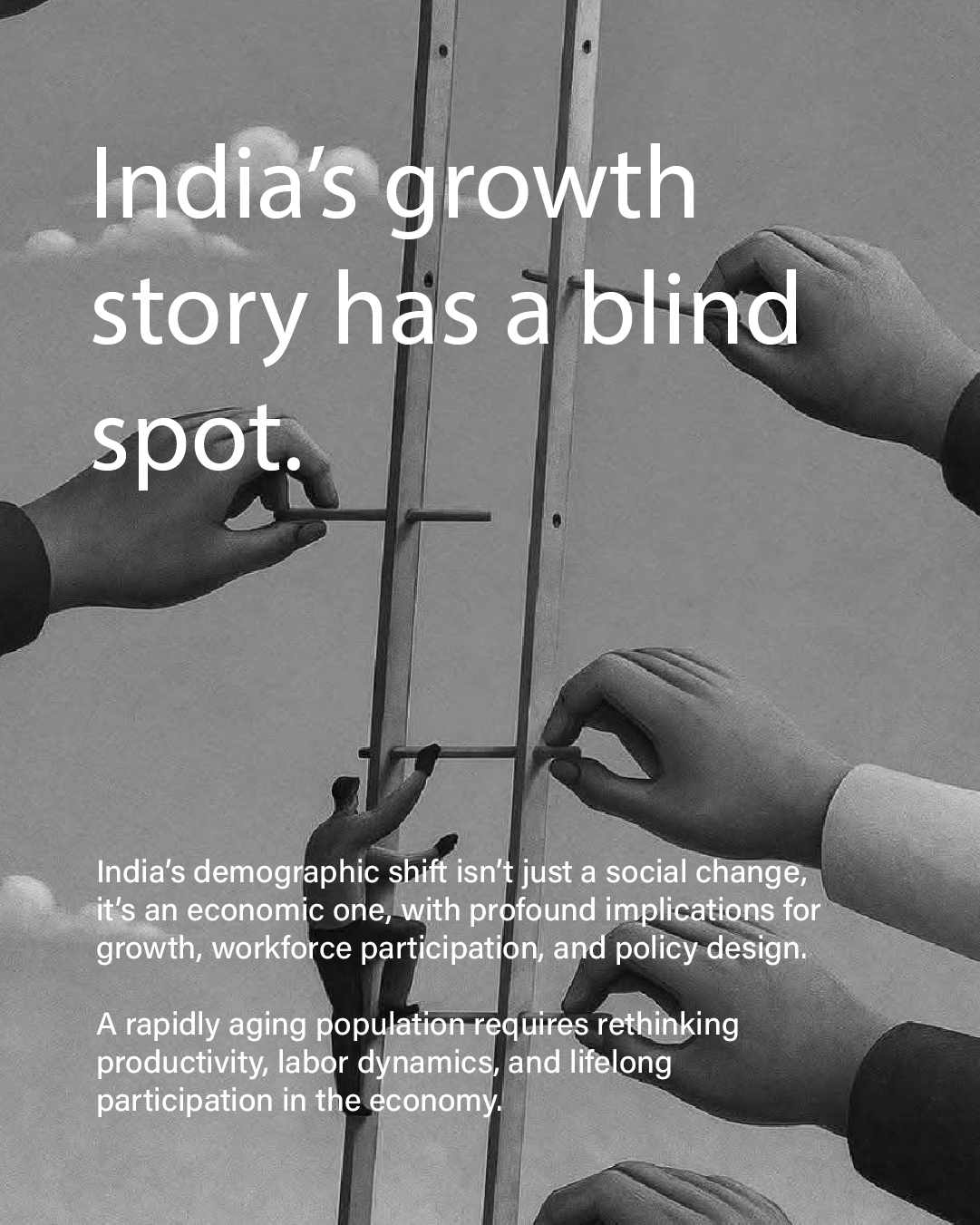
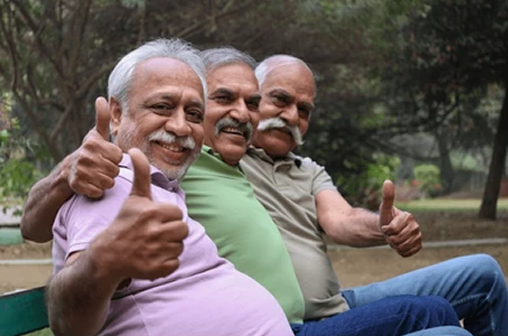
India has long been defined by its youth. For decades, we've spoken of the "demographic dividend" — a nation powered by its young workforce and restless ambition. But as the decades roll forward, a quiet transformation is underway. The country is growing older, and fast.
By 2050, nearly one in five Indians will be over 60 — about 347 million people in all (Source: India Today, 2023). This means that in a generation, the number of seniors will roughly double. And unlike wealthier nations that grew prosperous before they grew old, India is ageing amid uneven healthcare access, fragile pensions, and limited social security. The challenge, therefore, isn't just how long Indians will live — it's how well.
Between 2021 and 2031, India's elderly population is projected to expand by over 40 percent, faster than any other age group (Source: ORF, 2022). Fertility rates are already below replacement in most states, and longevity keeps climbing. Southern states such as Kerala and Tamil Nadu are ageing the fastest, while states like Bihar and Uttar Pradesh will catch up soon (Source: NFHS India, 2023). What makes these numbers sobering is the health profile that accompanies them. Around three-quarters of older Indians live with at least one chronic disease, and almost a quarter struggle with basic daily activities (Source: NITI Aayog, 2024). Nearly half report difficulty managing instrumental tasks such as cooking or shopping on their own. Yet fewer than one in five have any form of health-insurance coverage.
It's not an exaggeration to say that India's ageing story will be as consequential to its future as the software boom once was.
The term 'Silver Economy' was coined in Japan in the 1970s. It referred to a market of aged buyers marked by their silver hair. This market, typically marked by people over 60 years of age, bought and consumed considerable amounts of a wide variety of market offerings. In India, it is emerging from two strong currents: rising longevity and rapid urbanisation.
Healthcare and eldercare form the backbone of this economy — from geriatric outpatient clinics and home-health services to rehab, palliative care, and memory units. But the opportunity extends far wider: affordable insurance products that actually pay for rehabilitation or assistive devices; age-friendly housing; vernacular assistive tech; even travel and leisure designed with medical backup.
Industry analysts already see this as a potential multi-billion-dollar sector (Source: Economic Times, 2024). But beyond the market numbers, the silver economy could redefine what it means to age with dignity in India.
Ambition, however, is easier than readiness. Even in better-served states, India's public-health system struggles to meet older adults' needs. A 2024 study in Punjab, for example, rated the state's healthcare for the elderly as insufficient in many cases (Source: Times of India, 2024). At ground level, most primary health centres still lack basic geriatric screening, fall-risk assessments, or a dementia protocol. Out-of-pocket expenses remain high despite recent reductions (World Bank data). And because elders often juggle multiple conditions — diabetes, hypertension, arthritis, depression — the system must evolve from episodic hospitalisation to continuous, community-based care.
India's National Programme for Health Care of the Elderly (NPHCE) is a good start, but it needs deeper investment, trained staff, and outcome dashboards that track mobility, cognition, and quality of life rather than just patient counts.
Another quiet revolution is unfolding in how Indians age at work. The Longitudinal Ageing Study in India (LASI) found that roughly one-third of Indians over 60 are still working, mostly in informal roles (Source: NITI Aayog, 2024). For many, this is economic necessity; for some, it's purpose. The formal retirement age remains 60 in most sectors. Occasional rumours of a nationwide rise to 62 have been denied (Source: Economic Times, 2024), though a few states have nudged healthcare and academic roles up to 65.
But perhaps the question isn't whether we raise the retirement age, but whether we redesign it — from a cliff into a slope. Flexible, phased retirement could keep experienced workers engaged while mentoring the young. Women, especially, stand to benefit from late-career re-entry or flexible community work, provided urban safety and mobility are addressed.
Ageing is not just biological; it's social. Urbanisation and smaller families mean many elders now live alone or only with a spouse. LASI data show about 9 % of older women and 2.5 % of older men live alone (Source: UNFPA, 2023). That figure will rise as young people migrate for work. This calls for an urban rethink — what planners call '15-minute elderhood.' Every senior should have healthcare, groceries, parks, and companionship within a short walk. Benches, ramps, well-lit streets, and community hubs are not luxuries; they're enablers of independence.
Some cities are experimenting with senior activity centres and age-friendly building codes, but we're only at the beginning.
The silver economy is not about creating a new market segment — It's about safeguarding India's social fabric. If we get ageing right, we gain not only healthier elders but freer middle-aged caregivers, more inclusive cities, and a wave of innovation in healthcare, housing, and tech. The government can accelerate this by expanding NPHCE, mandating age-friendly design, and encouraging outcome-based eldercare insurance, while the industry can meet the moment with savings platforms, assistive tech that works in vernacular contexts, and affordable longevity-finance tools.
Ageing well is not just a personal goal anymore; it's a national priority. If India can reimagine ageing as participation rather than withdrawal, vitality rather than vulnerability, it could transform what it means to grow old in the Global South.
The demographic dividend may be fading — but a longevity dividend is waiting to be claimed.
Disclaimer: The content in this blog draws from publicly available research, studies, and expert perspectives to inform and inspire our readers. It is intended strictly for educational and informational purposes. All rights to referenced works remain with their respective authors and publishers. This blog should not be considered a substitute for professional financial, medical, or lifestyle advice. For a complete understanding of any referenced research, readers are encouraged to consult the original sources directly.
New North is a content platform by the Third Age Learning (3AL) research group at IIIT Hyderabad — a team dedicated to reimagining learning, purpose, and growth for the 55+ generation.
 Read more Blogs