
For many people today, building enough financial security to eventually step away from daily work stands as one of life’s defining goals. Retirement is imagined as a well‑earned pause: a time for rest, reflection, and perhaps reinvention. It is deeply embedded in modern culture, reinforced by pension plans, savings targets, and a fixed idea of a “retirement age.” Yet this idea, so universal today…is astonishingly young.
In 1900, the average global life expectancy was just 31 years. By 2017, it had climbed to over 72 years, driven by advances in medicine, sanitation, nutrition, and safer working conditions. For most of human history, people simply did not live long enough to justify a prolonged period of life after work.
Retirement as we know it emerged only when three forces converged: longer lives, rising prosperity, and structural changes brought on by industrialisation. It was not born out of compassion alone, but out of economic necessity, political strategy, and demographic pressure. To understand where retirement is headed next, we must first understand how, and why, it was invented.
Retirement is often treated as a natural stage of life, but historically it was neither natural nor universal. For centuries, only elites like royalty, clergy, and military veterans, were exempt from working until death. Augustus in Rome offered benefits to legionaries after 20 years’ service (13 BCE). Pensions were instruments of control and reward, not universal welfare.
The modern, state‑backed idea of retirement began in earnest with Otto von Bismarck’s 1889 social insurance in Germany: an old‑age pension for those aged 70 and over. It was politically calculated, few lived that long, yet revolutionary: the state would now underwrite old age and specify a retirement threshold.
For most of our evolutionary history, retirement was inconceivable because old age itself was rare. Anthropological evidence suggests that until about 30,000–40,000 years ago, average life expectancy hovered below 30 years. Fossilised human remains from this period show very few individuals surviving beyond 40.
High infant mortality, infectious disease, hunting injuries, and exposure to harsh environments ensured that humans lived short, strenuous lives. In such a world, the idea of saving for a distant, non‑working future seemed impossible to imagine.
Ancient Indian texts are filled with powerful older figures who shaped politics, warfare, and moral order.
Bhishma, bound by his vow, becomes the moral anchor of the epic despite his advanced years. Dronacharya and Kripacharya train generations of warriors well into old age. Bhagadatta, the aged king of Pragjyotisha, enters battle with wrinkles so heavy they fall over his eyes, forcing him to tie a silk cloth around his face so he can see his enemy. Old age is considered formidable.
Indian civilization recognised old age long before welfare states. The ashrama system formalised life into four stages: brahmacharya (learning), grihastha (householder), vanaprastha (withdrawal), and sannyasa (renunciation). Vanaprastha—often beginning around the age of 50—was perhaps one of the world’s earliest structured ideas of retirement. It did not mean idleness, but a deliberate turning away from material pursuits toward mentorship, reflection, and spiritual life.
In the West, one of the earliest documented pension systems can be traced to the Roman Empire. In 13 BCE, Emperor Augustus introduced a retirement benefit for legionnaires who had completed 20 years of service. Funded by taxes, the programme was less about generosity and more about control: retired soldiers with financial security were less likely to revolt against the state.
For centuries thereafter, pensions remained largely military privileges. Civilian elders depended on family support, religious institutions, or charity. There was no expectation that the state would underwrite old age.
That changed dramatically in 1889, when German Chancellor Otto von Bismarck introduced the world’s first national old‑age pension system. His motivation was unapologetically political. Faced with rising socialist movements and youth unemployment, Bismarck offered pensions to workers aged 70 and above, encouraging them to leave the labour force.
It was a political masterstroke as only a few Germans lived beyond 60 at the time, making the policy fiscally manageable.

In the United States, retirement developed through a mix of corporate innovation and public crisis. Private companies led the way. American Express introduced one of the first corporate pensions in 1875. The Baltimore & Ohio Railroad followed in 1880 with an employee contribution plan that blended company funding with worker savings.
By the 1920s, retirement benefits had become a powerful workforce management tool. Nearly 84% of railroad workers were covered by defined benefit pension plans, many of which extended beyond income support to housing and healthcare. Retirement homes, such as the Order of Railway Conductors’ facility built in Savannah in 1927, reflected the growing institutionalisation of old age.
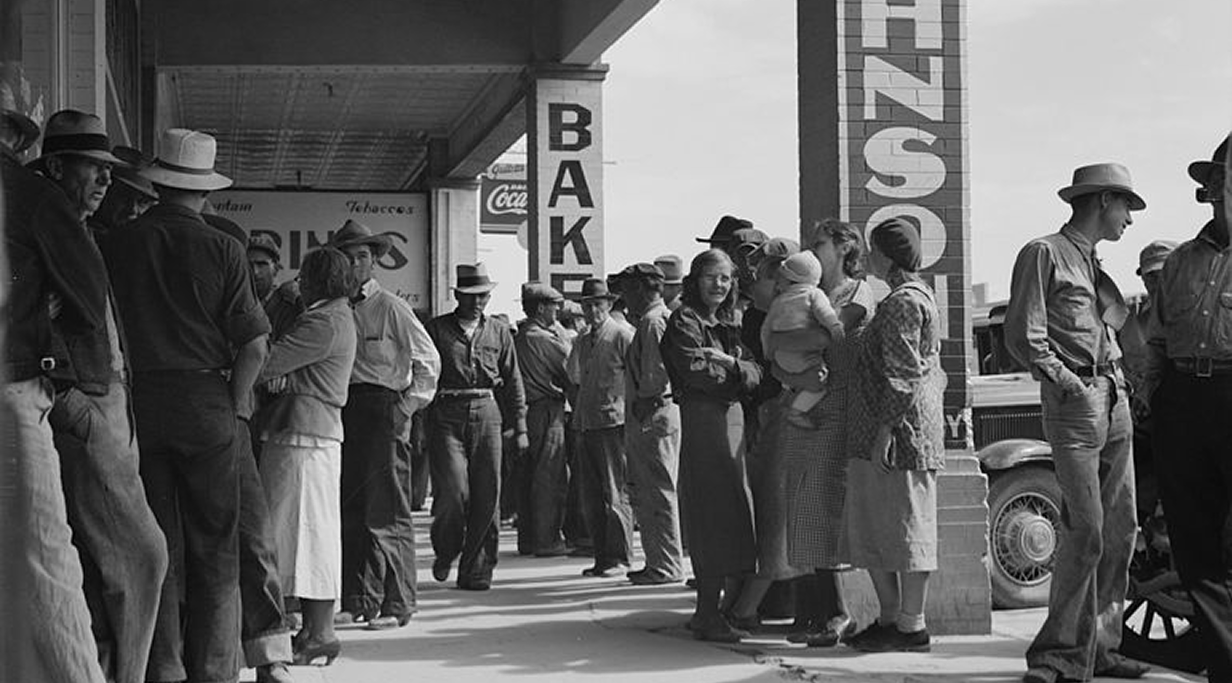
Then came the Great Depression. Mass unemployment and widespread elder poverty exposed the fragility of informal support systems. Dr. Francis Townsend, a physician forced into early retirement, proposed a radical idea: a monthly pension of $200 for every American over 60, funded by a national sales tax. The movement gained over five million supporters. In response, President Franklin D. Roosevelt enacted the Social Security Act of 1935, setting the official retirement age at 65.
Retirement is a macroeconomic force.
The McKinsey Global Institute’s 2008 analysis of U.S. Baby Boomers (nearly 79 million people) models that aging will reduce U.S. real GDP growth from an average 3.2% (1965–2007) to about 2.4% over the next three decades unless behaviour or policy changes. Their scenarios show that raising the median retirement age by ~1.5 years (from 62.6 to 64.1) could halve the share of financially unprepared Boomer households and, critically, add roughly $12.9 trillion cumulative to U.S. GDP versus a baseline where Boomers retire earlier.
Put simply: enabling older workers to stay attached to the labour force, through flexible hours, retraining, or part‑time roles, could add trillions of dollars to economic output, increasing household security.
In other words, retirement policy is productivity policy.
India’s retirement system remains fragmented. Unlike most OECD countries, India does not provide universal social security. Coverage concentrates in the organised sector: central/state government pensions, Indian Railways, Employees’ Provident Fund Organisation (EPFO), and the National Pension System (NPS). Many informal workers rely on family support or continued earning.
A useful scale marker: government documents and press releases show the EPFO’s corpus measured in lakh‑crore rupees, the Press Information Bureau reported EPFO funds at about ₹18.3 lakh crore (as of March 31, 2022). Central pension liabilities are significant and rising: consolidated pension budget lines and CPAO estimates show annual pension allocations running into hundreds of thousands of crores of rupees and growing year‑on‑year as retiree counts and average payouts increase.
Faced with longer lives and tighter public finances, many countries are gradually raising statutory retirement ages and reforming benefits. India raised central government retirement from 58 to 60 in 1998 and continues to debate age thresholds for various services. Across the OECD and beyond, incremental age increases, indexation to longevity, and incentives for later exit have become the norm.
Three forces drive population ageing: longer lives, falling fertility, and large cohorts moving into old age (the baby boom). The UN and national studies forecast dramatic shifts: the global population aged 60+ reached about 1.1 billion in 2022 and is projected to nearly double by 2050. By 2050, older adults will outnumber children in many countries for the first time in history.
India, long thought of as young, is already ageing. The UNFPA–IIPS India Ageing Report (2023) projects the share of those aged 60+ to rise from ~10.5% in 2022 to about 20.8% by 2050, a near doubling. Today India has over 100 million people aged 60+, and their numbers will climb rapidly in the coming decades.
This trajectory matters because India, and other developing economies, risk becoming old before rich: ageing before reaching the per‑capita incomes and fiscal capacity enjoyed by today’s wealthy nations. That makes universal, costly pensions harder to finance and strengthens the case for alternative strategies.
Retirement began as a narrow privilege, became a mass public promise, and now confronts demographic limits. The policy choices ahead are stark: preserve the mid‑20th‑century model at growing cost, or redesign work and social supports so longevity becomes an asset.
India’s cultural traditions, vanaprastha, multigenerational households, and respect for elder authority, offer social scaffolding. But demographic momentum, urbanisation and migration demand systemic innovations: phased retirement, lifelong learning and reskilling, workplace redesign for older adults, portable benefits for informal workers, and fiscal reforms tying retirement age to life expectancy.
India stands at a crossroads. But we are not alone.
In Part 2 of this series, we will explore what comes next: how the ageing workforce can be redesigned not as a burden, but as one of India’s greatest strategic advantages.
Sources:
https://www.tfginvest.com/insights/the-history-of-retirement
https://time.com/7198601/retirement-history/
https://share.google/JXRG52rgKQyMIaoU9
https://www.nber.org/system/files/chapters/c6108/c6108.pdf
Disclaimer: The content in this blog draws from publicly available research, studies, and expert perspectives to inform and inspire our readers. It is intended strictly for educational and informational purposes. All rights to referenced works remain with their respective authors and publishers. This blog always encourages substituting professional medical, financial, or lifestyle advice. For a complete understanding of any referenced research, readers are encouraged to consult the original sources directly.
New North is a content platform by the Third Age Learning (3AL) research group at IIIT Hyderabad — a team dedicated to reimagining learning, purpose, and growth for the 55+ generation.
 Read more blogs