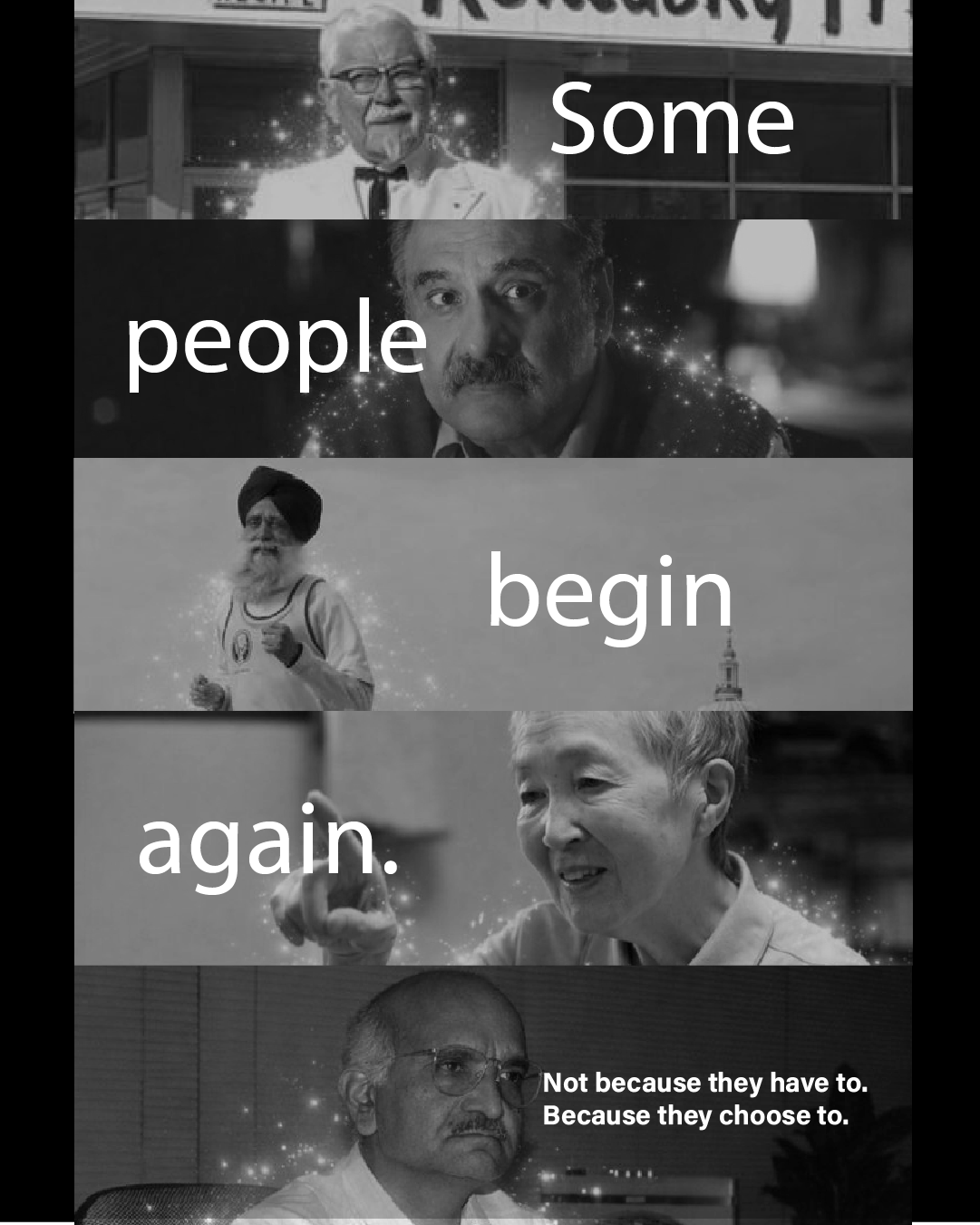

We often think of ageing as a slow drift toward decline: dimmer memory, weaker bodies, shrinking horizons. But the science of longevity is telling a brighter story. Across the world, researchers are studying people in their seventies, eighties, even nineties who defy the averages, older adults whose minds and bodies perform like those of people decades younger. They are called super-agers, individuals who stay mentally sharp, emotionally grounded, and physically strong far longer than most.
Their secret, as neuroscience now shows, lies not in genes alone but in the habits and attitudes they build over a lifetime (Harvard Health, 2024). For India, where one in five people will be over 60 by 2050 (India Today, 2023) super-aging isn't just an individual pursuit: it's a cultural imperative. We carry ancient wisdom about the "second half of life" with modern science about vitality and brain health. And if you're in your 40s or 50s, here's the truth: the foundation for super-aging is laid right now.
In your 20s, your body forgives you. In your 50s, it keeps score. This is the decade where resilience becomes a conscious choice, and where the habits that will carry you to 80 take root. Scientists studying super-agers at Northwestern University found that older adults who stayed cognitively "young" had thicker regions of the brain cortex and higher emotional resilience (The Lancet Healthy Longevity, 2023). Many of them shared one trait: they embraced effort. They didn't shy away from frustration; they leaned into it. It's what psychologist Emily Rogalski calls "the grit of age mind." It's what the world saw in Justice Ruth Bader Ginsburg, who began personal training at 68 and was still lifting weights into her 80s; or Mary "Grandma" Moses, who started painting seriously at 78 and became a world-renowned artist. India has its own extraordinary examples too: quiet, steady reminders that ageing doesn't have to mean retreat.
These are India's real super-agers: people who didn't stop evolving when the world told them to slow down.

The super-ager's brain is not a gift, it's a muscle trained by struggle. Research shows that the harder the task, the greater the growth. The discomfort you feel when learning something new is precisely what keeps neural pathways alive. For Indians in midlife, this doesn't mean enrolling in expensive programs. It means embracing novelty: learning a musical instrument, exploring a regional language, or teaching yourself digital tools that once felt intimidating. Neuroplasticity doesn't retire. You just have to show up. In a sense, this is what APJ Abdul Kalam modelled — a lifelong learner who continued to teach and inspire students even in his 80s: he showed that curiosity, not youth, is the real fuel of intellect.
The Body: Train for Independence, Not Perfection Super-agers move more consistently, joyfully, & deliberately. Studies show that aerobic fitness slows cognitive decline and preserves executive function (Harvard Health, 2024). In India, the form doesn't matter: morning yoga, park walks, dance classes, or community sports. What matters is rhythm. Even Rani Rampal's mother, once untrained in fitness, now joins local women's exercise groups in her 50s — a quiet revolution happening across small towns. If you're in your 50s, treat physical activity not as vanity but as insurance: a policy for autonomy. Strength preserves dignity. Balance prevents falls. Stamina buys freedom. The body you build in your 50s is the home you'll live in at 80.
Every long-life study points to the same truth: relationships are longevity's secret ingredient. Harvard's 85-year adult development study found that close relationships were a stronger predictor of long life than cholesterol or income. For Indians, this aligns with our cultural DNA: our family, community, spirituality. But as urban migration and digital life thin those threads, connection must become a conscious practice.
Look at Dr. Shanta, the legendary oncologist who served at the Adyar Cancer Institute into her late 80s. Her drive came not from ambition but from a deep sense of seva — purposeful service that kept her challenged her everyday. Or take Dadi Janki, the Brahma Kumaris leader who travelled and taught worldwide till her late 90s. Her message — "keep the mind light and the heart clean" — is modern neuroscience in spiritual form.
In truth, India has always been a civilization of potential super-agers. Our scriptures treat ageing not as decline but as evolution from grihastha (householder) to vanaprastha (wisdom) to sannyasa (purpose). Meditation, music, yoga, prayer, storytelling, community kitchens — these are not just cultural artefacts; they are evidence-based cognitive tools. They build focus, emotional resilience, and social integration, all proven factors in brain longevity. When Pandit Jasraj sang publicly into his 80s, or when Asha Bhosle took the stage at 80, they weren't defying age, they were simply continuing the practices that had kept their brains alive all along.
By the time you turn 80, you'll be living the outcome of your 50s, in your reflexes, memory, curiosity, and kindness. Super-aging doesn't happen by chance; it's built in small, steady choices made over decades. If there's one thread that ties every example together, from Fauja Singh to Ruth Bader Ginsburg, from Gulzar to Grandma Moses, it's this: they all kept moving toward something.
So if you're in your 50s today, remember
Move every day. Learn every year. Love
all your life. That's not just how you live long, rather how you well you live.
Disclaimer: The content in this blog draws from publicly available research, studies, and expert perspectives to inform and inspire our readers. It is intended strictly for educational and informational purposes. All rights to referenced works remain with their respective authors and publishers. This blog always encourages substituting professional medical, financial, or lifestyle advice. For a complete understanding of any referenced research, readers are encouraged to consult the original sources directly.
New North is a content platform by the Third Age Learning (3AL) research group at IIIT Hyderabad — a team dedicated to reimagining learning, purpose, and growth for the 55+ generation.
 Read more blogs